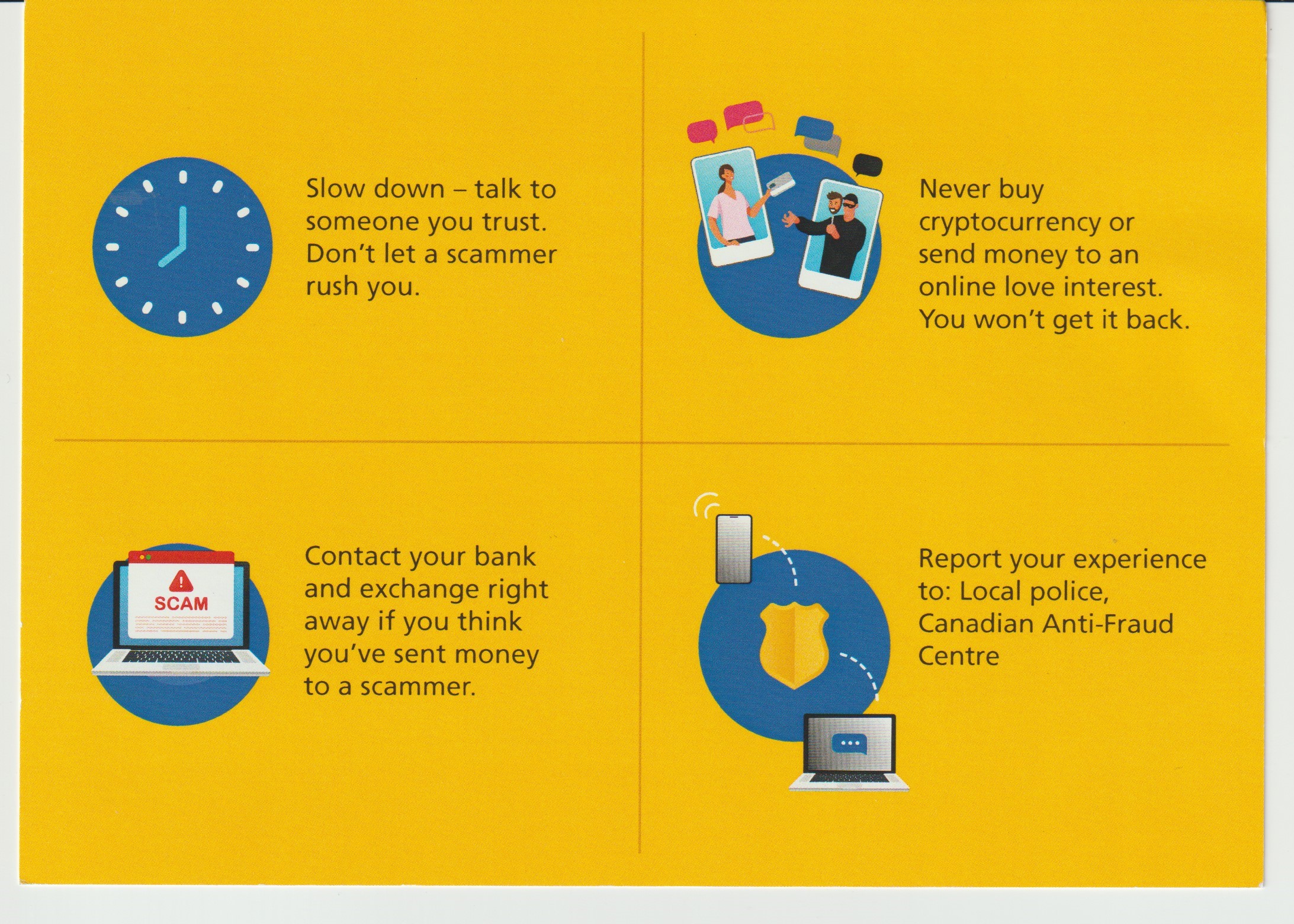
I spent decades as a respected financial-services entrepreneur, building my reputation and credit score from the ground up — only to have them ripped away by the very KYC safeguards I trusted most. One day, my credit-card issuer called to say someone had rung up dozens of unauthorized charges on my account. I was stunned — but they didn't even seem embarrassed. Instead, they grilled me for paperwork, then admitted their identity checks had glaring holes that let a fraudster slip in under my good name.
Over the next months, I chased creditors and credit-reporting agencies through endless phone menus and document uploads. Their "rigorous" KYC processes never once flagged the criminal who opened multiple new lines of credit in my name. Meanwhile, my personal life unraveled, and I was forced into early retirement before turning 65 just to manage the fallout.
As if that weren't enough, every few years I must now drag myself down to the local police station, present two government-issued photo IDs, be fingerprinted, and wait days while they run my prints against six different criminal databases — to prove I'm not the "other" Ted Lee. It's absurd: I'm treated like a suspect because these institutions can't be bothered to secure their own onboarding.
How My Data Turned Up on the Dark Web
My personal information has been scraped and sold in multiple high-profile breaches — yet each company hides behind promises of "improved security." Here's where my details were exposed:
| Breach | When | Records Exposed | Key Details |
|---|---|---|---|
| Epik | September 2021 | Millions | Email, name, phone, address, purchases, passwords — open database of millions of customer profiles |
| Gravatar | October 2020 | Millions | Names, usernames, MD5 hashes of emails — weak hashing easily reversed |
| Lead Hunter | March 2020 | Millions | Emails, genders, IPs, names, phones, addresses — mass-marketing data breach |
| MyFitnessPal | February 2018 | Millions | Emails, usernames, IPs, SHA-1 & bcrypt passwords — poor password hashing standards |
| MySpace | c. 2008 (leaked 2016) | Millions | Emails, usernames, SHA-1 password hashes — old credentials resurfaced years later |
What I've Learned — and What You Should Do
- Never use your real name on public forums or social media
- Invent a birthday for non-official services
- Use a reputable password manager (I trust Bitwarden)
- Always connect through a VPN when away from home (I use ZoogVPN)
- Stick to HTTPS — never HTTP — on web browsers
- Pull and review your credit reports annually
- Encrypt email with PGP (see my PGP guide)
- Visit local police yearly for fingerprint re-verification
- At home, isolate Wi-Fi — use a firewall router and a decentralized VPN (dVPN)
- Be cautious when donating — check charities' identity-verification practices
The Hidden Dangers of KYC Data
Beyond identity theft lies a darker truth: when you hand over copies of your passport or SIN, you surrender control of your most sensitive data. For a deeper dive, visit our KYC Privacy Risks & Data Breaches page.
Why It's Dangerous to Share Your KYC Data
- You lose control over your identity when you don't know where or how your data is stored.
- Opaque encryption practices raise the risk of large-scale breaches.
- No clear accountability means you may never learn if your data is exposed.
- Unmonitored access can lead to profiling, surveillance, or discriminatory misuse.
- Failing to disclose storage standards can violate privacy laws (e.g., PIPEDA in Canada).
Five Major Data Breaches Involving KYC Records
| Breach | When | Records Exposed | Key Details |
|---|---|---|---|
| Chinese Surveillance Database | June 2025 | 4 billion | Unprotected WeChat, Alipay, banking & behavioral profiles |
| CAM4 Adult-Streaming Site | March 2020 | 10.88 billion | Unsecured server exposed personal & payment data |
| Yahoo | 2013–2017 | 3 billion | Account credentials, security questions, password hashes |
| National Public Data Broker | August 2024 | 3 billion | Names, addresses, birthdates, phone numbers |
| ICMR Aadhaar Hack (India) | 2023 | 815 million | Biometric IDs, passports, phone numbers, addresses |
Why Governments Aren't Helping
- Compulsory KYC laws force citizens to surrender SIN, passports, biometric data.
- Lack of public audits means no proof data centers meet security standards.
- Expanding surveillance mandates increase mission-creep and profiling risks.
- Weak or absent encryption disclosures leave critical systems vulnerable.
- Civic trust erodes when oversight bodies can't verify real-world protections.
Bill C‑22 Is About to Do This to Every Canadian
What happened to me — my data collected, stored insecurely, then breached and weaponized against me — is exactly what Canada's Bill C‑22 is about to mandate at a national scale. The difference: I chose to open those accounts. Under Bill C‑22, every Canadian's metadata will be logged and retained whether they consent or not.
Read the full analysis: Bill C‑22 and Your Privacy →⚠ Bill C‑22: When the Government Mandates the Risk
Everything on this page so far has been about corporate failures — companies that collected my data, secured it poorly, and left me to suffer the consequences. That's bad enough. But what's coming under Canada's Bill C‑22 is structurally worse, because this time it isn't a company making a reckless business decision. It is the government of Canada mandating that a version of this risk be created for every single Canadian — without a choice to opt out.
Bill C‑22 is Canada's lawful-access legislation. In plain terms, it requires internet service providers (ISPs) and telecommunications companies to retain detailed records about your digital activity — and to build the technical systems needed to hand that data to law enforcement on demand. This is not a hypothetical future threat. The legal framework is being built now.
What Gets Collected About You
The data retained under lawful-access frameworks isn't just your name and address. It is metadata — the digital exhaust of your daily life. People often assume metadata is harmless because it isn't the content of your messages. They are wrong.
Research has demonstrated that metadata alone — with no message content whatsoever — can reliably reveal a person's religion, medical conditions, political views, relationships, financial situation, and daily routine. If I had known my KYC data was this richly revealing, I would have fought harder to protect it. Bill C‑22 creates records that are, in some ways, even more revealing than the KYC data that destroyed my credit.
The Honeypot Problem: Mandated Risk at National Scale
The largest data breaches in history — several of which are listed in the table above — share one common feature: the data existed in a large, centralized store that was valuable enough to attract serious attackers. In cybersecurity this is called a "honeypot" — a dataset so rich that criminals, foreign intelligence services, and malicious insiders will invest significant effort to steal it.
Bill C‑22 effectively mandates the creation of honeypots — not at one company, but across every ISP and telecom provider in Canada. These stores will contain:
- Comprehensive digital behavioural records on millions of Canadians
- Data retained for extended periods — meaning more records accumulate over time
- Technical access interfaces that must, by law, exist — and which therefore represent pathways an attacker could exploit
- Variable security standards across dozens of providers, from large carriers to small regional ISPs
Old Risk vs. New Risk: What Changes Under Bill C‑22
Before Bill C‑22
Corporate data failure
- You chose to open an account
- Company decided what to collect
- You could choose a different provider
- Breach affects customers of that company
- Company bears legal and reputational cost
- Data deleted when no longer needed
Under Bill C‑22
Government-mandated collection
- No choice — all Canadians are affected
- Government dictates what must be retained
- No alternative provider to switch to
- Breach affects potentially all Canadians
- Government mandated it; company holds it; you suffer
- Data retained for mandated period regardless
What Could Happen If This Data Is Stolen
My own breach experience shows what one person suffers when their personal data leaks. Now imagine that multiplied across 38 million Canadians, from a single breach of a major ISP's lawful-access retention store:
- Identity fraud at scale — metadata combined with other stolen data becomes a powerful identity-theft toolkit, enabling criminals to answer security questions, bypass two-factor authentication, and impersonate victims
- Targeting of vulnerable people — domestic abuse survivors, journalists, whistleblowers, and political activists could be identified and tracked by hostile actors using retained location and contact metadata
- Sensitive pattern exposure — calls to addiction hotlines, mental health services, legal aid, and medical specialists can be inferred from metadata — information that can be weaponized, used for extortion, or sold to bad actors
- Foreign intelligence exploitation — organized, centralized metadata stores are exactly what foreign state actors seek; they are far more valuable than scattered corporate records
- Social graph reconstruction — even without message content, who you called, when, how often, and for how long reveals your entire social and professional network
The Accountability Gap — Exactly Like What Happened to Me
When my data was breached, I quickly learned a hard lesson: the companies that lost my data faced limited consequences. They apologized, offered credit monitoring, and moved on. I spent years cleaning up the mess.
The Bill C‑22 accountability structure is the same — except worse:
- The government passes a law requiring the data to exist and be accessible
- The private company (your ISP) is left to secure it, at its own cost, to its own standard
- You — the Canadian whose metadata it is — had no say, no choice, and no meaningful recourse if it is stolen
What You Can Do Right Now
The most effective action any Canadian can take is to contact their Member of Parliament and ask, clearly and directly, what safeguards are in place, who is accountable if this data is breached, and what remedies will be available. A respectful letter from a constituent carries real weight.
The full analysis — including a plain-language explanation of metadata, the honeypot risk, the accountability gap, and a ready-to-copy letter you can send to your MP — is available here:
🔒 Read: Bill C‑22 and Your Privacy — Full Analysis & MP Letter →
Final Thoughts
Too many companies tout "bulletproof KYC," then drop the ball when criminals come knocking. I'm still hyper-vigilant, distrustful of any onboarding process that doesn't demand more than just a copy of my driver's license. If my story and these insights help you tighten your defenses — even by a fraction — it's worth sharing.
And now there is a second threat to be vigilant about — one that doesn't require you to open an account anywhere, sign up for anything, or do anything at all. If you are a Canadian with an internet connection, your metadata will be collected and retained under lawful-access legislation. The same patterns that led to every breach described on this page are being deliberately recreated by law. That's not paranoia. That's policy analysis. Read it, share it, and write to your MP.